
Table of Contents
Spine Care in Penang: Preventing Back Problems and Restoring Long-Term Mobility
Back pain is one of the most common reasons people seek physiotherapy in Penang, but effective spine care goes far beyond treating pain after it appears. True long-term spine health requires prevention, posture correction, and evidence based mobility retraining that protects the spine throughout daily activities, work demands, and the natural ageing process.
A dedicated approach to Spine Care in Penang focuses not only on relieving discomfort but also on restoring proper body mechanics, strengthening the core stabilisers, and teaching movement habits that keep the spine healthy for years to come.
For pain-focused information, you may refer to your existing guide:
🔗 Spine Care Penang: Expert Help for a Stronger, Healthier Back

Why Spine Care in Penang Should Start Before Pain Appears
Most people only seek treatment once back pain becomes unbearable. But research shows that spinal problems often start months or years before symptoms surface due to:
- Poor sitting posture
- Weak deep-core muscles
- Limited hip or thoracic mobility
- Prolonged static positions
- Sedentary lifestyles
- Repetitive workplace strain
Early spine care helps prevent:
- Disc degeneration
- Chronic lower back tightness
- Nerve irritation
- Recurrent spasms
- Joint stiffness
- Age-related mobility limitations
By training the spine to move correctly, and strengthening the muscles that support it, people experience fewer flare-ups and maintain better function as they age.
Common Spine Problems Treated in Penang Clinics
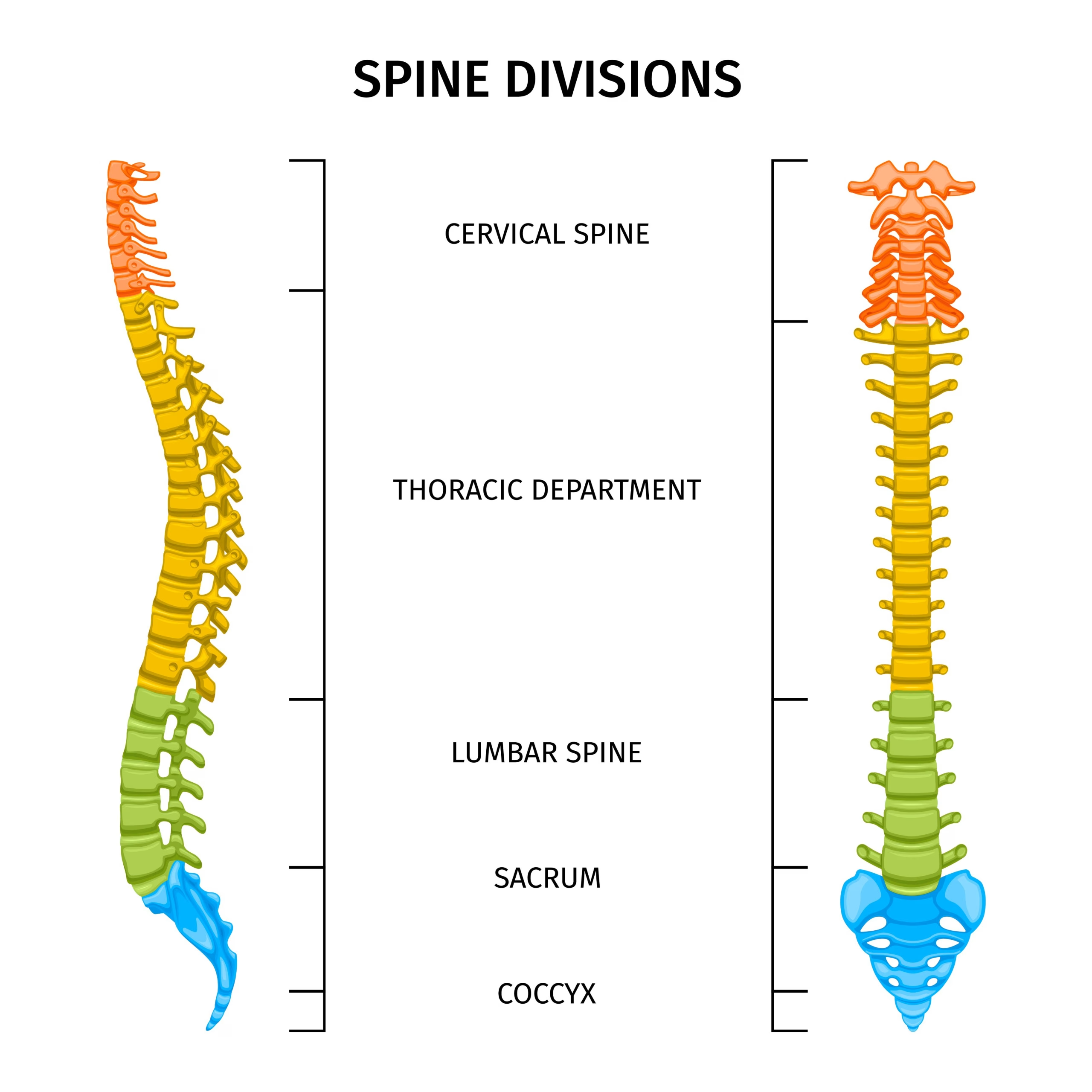
A modern spine care program addresses a wide range of back-related conditions:
- Mechanical low back pain
- Slipped disc / disc bulges
- Sciatica
- Degenerative disc disease
- Poor posture syndromes (e.g., hunchback/forward head posture)
- Spinal facet joint stiffness
- Scoliosis-related discomfort
- Age-related mobility loss
- Muscle imbalances affecting the spine
Each of these conditions benefits greatly from a combination of mobility training, stabilisation exercises, and posture re-education.
Prevention First: The Foundation of Modern Spine Care
Preventive spine care is not simply about stretching or keeping active. It requires targeted strategies that address how the spine loads and moves throughout the day.
1. Postural Awareness & Ergonomic Correction
Poor posture is one of the biggest contributors to spine stress.
A preventive spine program includes:
- Workplace ergonomic assessment
- Correction of forward head posture
- Training neutral spine alignment
- Safe lifting mechanics
- Sitting/standing posture optimisation
Patients learn how to maintain spinal neutrality in real-life situations, desk work, household tasks, driving, or exercise.
Why this matters:
Proper posture redistributes load evenly, reducing pressure on discs, facet joints, and supporting muscles.
2. Mobility Restoration for Better Spinal Function
Stiffness in areas surrounding the spine, especially the hips and thoracic (mid-back) region, often forces the lower back to compensate, creating pain.
A complete spine mobility program includes:
- Thoracic rotation drills
- Hip flexor & glute mobility work
- Lumbar decompression exercises
- Controlled spinal segmental mobility
- Flexibility routines tailored to your movement patterns
Restoring mobility is crucial for:
- Reducing muscle tension
- Improving movement efficiency
- Preventing strain on spinal discs
- Enhancing daily movement comfort
3. Strengthening the Deep Core & Spinal Stabilizers
A strong back is not only about big muscles, it’s about the core stabilisers that protect the spine.
These include:
- Transverse abdominis (deep core belt)
- Multifidus (segment-level spinal stabiliser)
- Diaphragm
- Pelvic floor muscles
Spine care centres in Penang integrate:
- Anti-rotation training
- Core endurance exercises
- Glute activation sequences
- Functional stability drills (lifting, bending, carrying)
Strengthening these muscles shields the spine from excessive strain during daily tasks.
4. Functional Movement Re-education
Many spine problems persist because people move inefficiently, arching too much, bending incorrectly, or relying on the wrong muscles.
Movement retraining focuses on:
- Hip hinge mechanics
- Safe bending and lifting
- Walking gait correction
- Squatting and stepping patterns
- Realigning movement chains (hips, pelvis, spine, shoulders)
Over time, the spine learns to move with less stress and greater stability.
Advanced Techniques Used in Spine Care in Penang
Modern rehabilitation clinics use a combination of hands-on therapy and scientific training methods.
✔ Manual Therapy & Spinal Mobilisation
Improves joint mobility and reduces stiffness.
✔ Myofascial Release
Targets tight structures like QL, piriformis, paraspinals, thoracic extensors.
✔ Posture Retraining & Biofeedback
Sensors or therapist-guided cues correct movement habits instantly.
✔ Core Strengthening & Stability Training
Rebuilds the body’s natural support system.
✔ Movement Pattern Correction
Addresses incorrect lifting mechanics, bending habits, or work-related patterns.
✔ Exercise Therapy
Structured routines to target flexibility, strength, and endurance.
✔ Education & Lifestyle Modification
Crucial for preventing recurrence.
Exercises That Support Long-Term Spine Health
These are commonly prescribed in Penang spine care centres:
1. Cat-Camel Mobility Drills – Restores gentle spinal movement.
2. Hip Hinge Training – Teaches the body to bend safely from the hips.
3. Deep-Core Activation (e.g., Dead Bug, Bird Dog) – Improves spinal stability.
4. Thoracic Rotation Exercises – Reduces lower back compensation.
5. Glute Strengthening (bridges, clamshells, step-ups) – Offloads pressure from the spine.
6. Anti-Rotation Training (Pallof press) – Teaches the body to resist unwanted spinal movement.
Note: These should be personalised, what works for one spine condition may aggravate another.
Restoring Mobility: What Patients Can Expect
A structured spine care program results in:
- Better posture and movement habits
- Improved spinal flexibility
- Stronger core stability
- Less muscle tension
- Reduced nerve irritation
- Greater confidence when bending, lifting, or exercising
- Lower risk of chronic back problems
- Enhanced long-term mobility
The goal is not only to eliminate pain but to ensure the spine can move comfortably and safely for the long run.
Who Benefits from Spine Care in Penang?
Conditions treated:
- Office workers with poor posture
- Individuals with recurring back tightness
- People with disc problems or nerve pain
- Seniors experiencing age-related stiffness
- Active individuals who want to move safely
- Anyone recovering from back injuries
- People wanting to prevent future spine issues
FAQ: Spine Care in Penang
1. Can good posture really prevent back pain?
Yes, posture affects spinal load distribution and long-term disc health.
2. How long does it take to improve spinal mobility?
Most people see noticeable changes within 2–6 weeks with consistent training.
3. Do I need imaging (X-ray/MRI) before starting spine care?
Not always. Physiotherapists assess function first and only recommend imaging if necessary.
4. Is exercise enough for long-term spine health?
Exercise is crucial, but posture and daily movement habits play an equally important role
Invest in Your Spine Today — Your Future Mobility Depends On It
Your spine supports everything you do, from sitting and walking to working, exercising, and sleeping. Effective Spine Care in Penang ensures your back stays strong, mobile, and painfree for the long term.
With preventive strategies, posture-focused retraining, and mobility restoration exercises, you can build a healthier spine and prevent many chronic problems before they begin