
Table of Contents
Physiotherapy After Surgery: What Rehabilitation Can Help You Regain
Surgery can address the underlying problem, but recovery does not necessarily end once the procedure is completed.
After surgery, you may experience pain, stiffness, reduced strength or difficulty performing movements that were previously routine. Depending on the type of surgery, physiotherapy may form an important part of rehabilitation by helping you gradually regain movement, strength and function.
The timing and type of physiotherapy depend on the procedure and your medical condition. Some patients begin rehabilitation soon after surgery, while others may need to wait until the surgeon considers it appropriate.
What can happen after surgery?
It is common for movement and physical function to change during the recovery period.
Depending on the procedure, you may experience:
- Reduced joint or muscle movement
- Weakness after a period of reduced activity
- Difficulty walking or using the affected limb
- Stiffness
- Reduced balance or coordination
- Difficulty returning to work, exercise or sport
- Loss of confidence when using the affected area
These changes do not necessarily mean that something has gone wrong.
Your body may simply need time and appropriate rehabilitation to regain the physical capacity required for normal activities.
What can physiotherapy help you regain?
Physiotherapy after surgery is generally focused on restoring function progressively rather than simply reducing pain.
Depending on your surgery and recovery stage, rehabilitation may help you work towards:
Movement and mobility
Surgery, swelling, pain and reduced activity can affect how freely you move.
Physiotherapy may include appropriate exercises and movement strategies to help restore mobility while respecting any restrictions following the procedure.
The specific exercises depend on the operation. A programme suitable after knee surgery may be very different from one used after shoulder or spinal surgery.
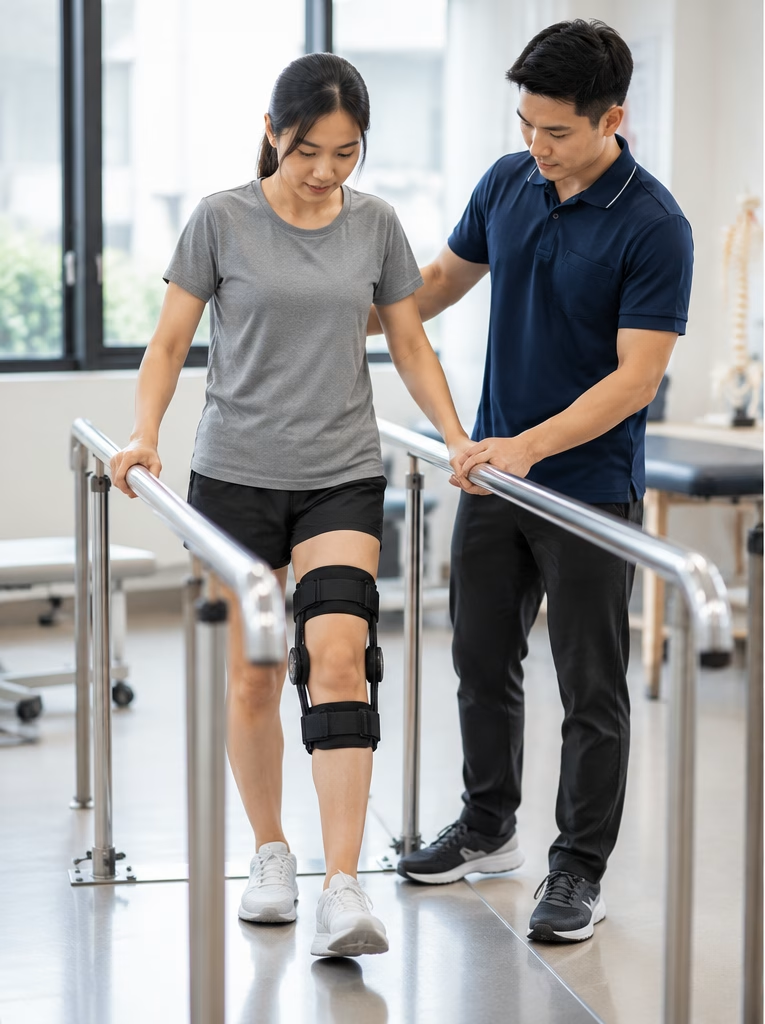
Strength
Reduced activity after surgery can result in muscle weakness.
Once appropriate, strengthening exercises can help rebuild the physical capacity needed for everyday activities.
For example, rehabilitation after lower-limb surgery may focus on improving strength needed for walking, stairs and other functional movements.
Strengthening should be progressed according to your recovery rather than based on how quickly you want to return to your previous level.
Balance and coordination
Some surgeries or injuries can temporarily affect balance, confidence or coordination.
Where relevant, physiotherapy may include exercises designed to improve these areas and make everyday movement more controlled.
This can be particularly important when the goal is to return to walking independently or resume more physically demanding activities.
Everyday function
Being able to move a joint does not necessarily mean that you are ready to perform normal daily activities.
Rehabilitation can focus on practical movements such as walking, standing, climbing stairs, reaching, lifting or other activities relevant to your needs.
The goal is to gradually restore the functions that matter to you.
Physiotherapy is not the same after every surgery
There is no universal post-surgery physiotherapy programme.
Your rehabilitation depends on factors such as:
- The type of surgery
- The body part involved
- The reason for the surgery
- Your previous physical condition
- Your current symptoms
- Your surgeon’s instructions
- Any movement or weight-bearing restrictions
- Your recovery progress
- Your work, exercise or sporting goals
For example, rehabilitation following joint surgery may focus heavily on restoring movement and strength, while another procedure may require a different approach and a more cautious progression.
This is why following the specific post-operative instructions provided by your surgeon or medical team is important.
When should physiotherapy start after surgery?
There is no single starting point that applies to every operation.
Some procedures require movement or rehabilitation relatively early, while others have specific precautions that need to be followed first.
Your surgeon or medical team may provide instructions about when you can begin physiotherapy, how much weight you can place through a limb, which movements to avoid and when you can progress activities.
Your physiotherapist can then work within those restrictions when developing your rehabilitation programme.
If you have recently undergone surgery and are unsure when physiotherapy should begin, check with your surgical or medical team rather than assuming that an exercise programme is appropriate.
What happens during post-surgery physiotherapy?
Your first rehabilitation assessment will usually consider your current condition and recovery stage.
Your physiotherapist may discuss:
- The type and date of your surgery
- Your current symptoms
- Your movement limitations
- Your current level of activity
- Any restrictions provided by your surgeon
- Activities you want to return to
- Your progress since surgery
Depending on the procedure, the physical assessment may look at movement, strength, balance, walking ability or other relevant functions.
The findings can then be used to establish appropriate rehabilitation goals and exercises.
Rehabilitation should progress gradually
It can be tempting to do more as soon as you start feeling better.
However, feeling less pain does not automatically mean that the tissues involved in surgery are ready for unrestricted activity.
Post-operative rehabilitation therefore generally progresses in stages according to the procedure and your recovery.
You may start with relatively simple movements or exercises before progressing to more demanding activities.
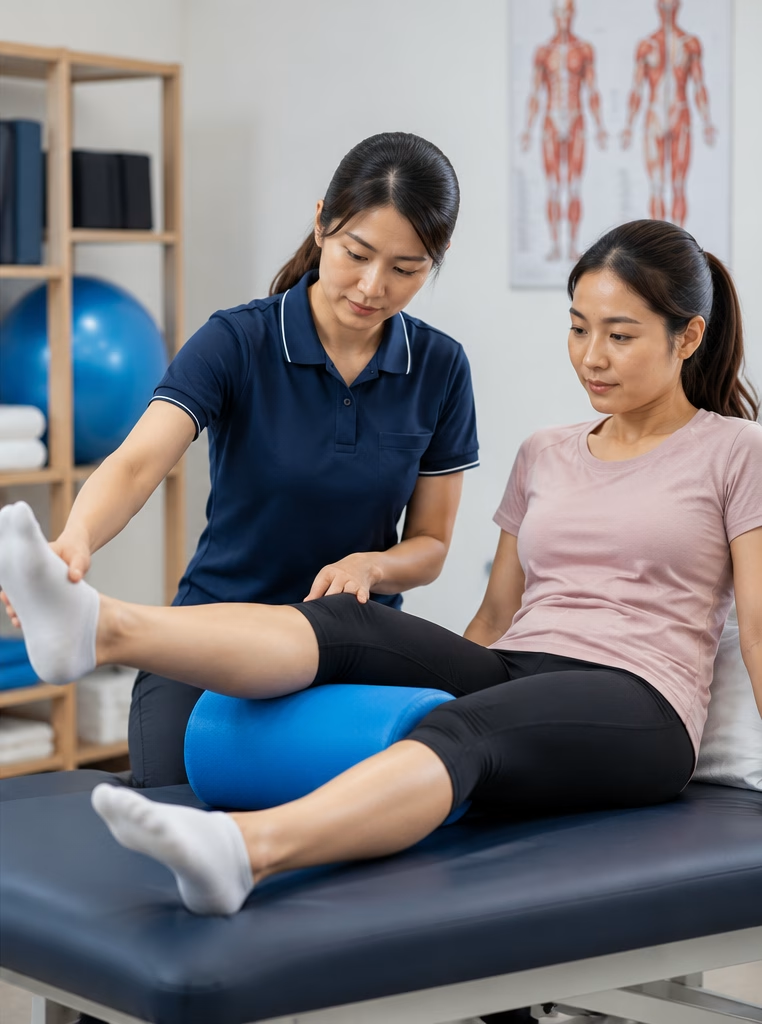
The goal is not to progress as quickly as possible. It is to progress appropriately while following the restrictions and recommendations relevant to your surgery.
If an exercise causes significant or unexpected symptoms, discuss this with your physiotherapist rather than simply pushing through it.
What if you still have pain during rehabilitation?
Some discomfort can occur during recovery, but persistent, severe or worsening symptoms should not simply be ignored.
Your physiotherapist can help you understand how your symptoms are responding to rehabilitation and whether your exercises or activity levels need to be adjusted.
However, physiotherapy should not replace medical review when there are concerns about the surgical site or your general recovery.
Contact your medical team promptly if you develop concerning symptoms such as increasing redness or swelling around the surgical area, discharge, fever, severe or rapidly worsening pain, or other symptoms that your surgical team has warned you about.
When will you be able to return to normal activities?
Recovery time varies considerably.
Returning to everyday activities may happen earlier than returning to demanding exercise, heavy physical work or competitive sport.
Rather than using a fixed number of weeks as a guarantee, your rehabilitation should consider your specific surgery, healing progress, physical capacity and activity requirements.
For example, being able to walk comfortably may be an important early milestone, while returning to running or sport may require further strength, movement and functional progression.
Your physiotherapist can help monitor these changes and adjust your rehabilitation as you progress.
Frequently Asked Questions
1. Do I need physiotherapy after surgery if I already feel better?
Feeling better does not necessarily mean that your movement, strength or physical function have fully recovered. Depending on the surgery, rehabilitation may help you safely progress towards normal activities, work, exercise or sport. Whether physiotherapy is necessary depends on the procedure and your individual recovery.
2. Can I start physiotherapy immediately after surgery?
Not necessarily. The appropriate timing depends on the type of surgery and your surgeon’s instructions. Some procedures involve early rehabilitation, while others require specific precautions or a period of healing before certain movements or exercises are introduced. Always follow the post-operative instructions provided by your medical team.
3. What should I bring to my first physiotherapy appointment after surgery?
Bring your discharge or post-operative instructions, relevant medical reports, details of the surgery and any information about movement or weight-bearing restrictions. Tell your physiotherapist about your current symptoms, medications and any activities you are hoping to return to.
4. What if physiotherapy exercises make my pain worse after surgery?
Do not simply push through significant or unexpected pain. Tell your physiotherapist what happened, including which exercise caused the symptoms and how long they lasted. Your programme may need to be adjusted, or you may need to contact your surgical or medical team if the symptoms are concerning.
Physiotherapy can be part of the recovery process
Surgery and physiotherapy have different roles.
The surgical procedure addresses the medical problem requiring surgery, while rehabilitation can help you work towards restoring movement, strength and function afterwards.
Physiotherapy may therefore be an important part of recovery for appropriate patients, but it should always be guided by the type of surgery and the instructions provided by your medical team.
At Lo Physiotherapy, rehabilitation and physiotherapy services are provided for a range of musculoskeletal conditions, with treatment approaches including exercise therapy, manual therapy and other physiotherapy modalities where appropriate. You can visit Lo Physiotherapy rehabilitation centre in Bayan Lepas, Butterworth and other areas for more information.
If you have undergone surgery and are considering physiotherapy, bring your surgical information and any post-operative instructions to your assessment. This gives the physiotherapist useful information when planning rehabilitation.