
Table of Contents
Pain Management in Butterworth: Modern Physiotherapy Techniques for Lasting Relief
Chronic pain is one of the most common health challenges faced by residents in Butterworth, affecting employees in logistics hubs, manufacturing plants, office settings, retail work, and active individuals engaged in sports. When pain becomes persistent, it doesn’t only interfere with mobility but impacts sleep, productivity, mood, and overall quality of life.
Modern physiotherapy now offers evidence-based, targeted pain management solutions that aim not only to reduce discomfort, but to correct underlying dysfunctions and restore long-term physical resilience.
In this comprehensive guide, we explore how advanced physiotherapy techniques used in Pain Management in Butterworth support recovery from joint, muscle, and nerve-related pain, and how patients achieve long-lasting improvements.
For condition-focused resources, you may also refer to our Penang-based guides:
– Top 5 Conditions Treated by Pain Management in Penang
– Acupuncture for Pain Management in Penang

Understanding Pain Patterns in Butterworth
Butterworth’s lifestyle and work environment contribute significantly to common pain issues:
1. Manufacturing & Industrial Work
Many residents are involved in physically demanding jobs involving:
- heavy lifting
- repetitive upper limb movement
- prolonged standing
- awkward bending or reaching
These often lead to:
- lower back strain
- shoulder tendon issues
- knee pain
- neck stiffness
2. Desk-bound & Administrative Work
Office workers commonly experience:
- poor posture
- weak core and upper back muscles
- prolonged sitting
Leading to:
- neck pain
- upper back tightness
- tension headaches
3. Sports & Recreational Activities
Futsal, badminton, gym training, and running are extremely popular locally.
This results in:
- acute sprains
- muscle tightness
- knee overload
- plantar fasciitis
4. Age-Related Degeneration
Older adults frequently face:
- osteoarthritis
- spinal degeneration
- balance issues
- chronic muscle stiffness
Modern Physiotherapy Techniques for Pain Management in Butterworth
Below is a detailed breakdown of modern, science-backed physiotherapy techniques used to treat pain effectively and safely.
1. Clinical Manual Therapy: Correcting Joint & Soft Tissue Dysfunction
Manual therapy is not just massage, it is a specialised, clinical approach involving:
- joint mobilisations
- deep tissue release
- nerve glides
- spinal manipulation (if suitable)
Mechanism of action:
- reduces pressure on irritated joints
- restores movement in stiff segments
- improves circulation to painful tissues
- rebalances overloaded muscles
Common applications:
- mechanical lower back pain
- cervical stiffness
- frozen shoulder
- sacroiliac joint dysfunction
Expected patient outcomes:
- pain reduction within 1 to 3 sessions
- smoother, less restricted movement
- better posture and alignment
2. Instrument-Assisted Soft Tissue Mobilisation (IASTM)
A modern technique using stainless steel or polymer tools to treat:
- chronic muscle tightness
- tendon overuse
- scar tissue
- fascial adhesions
Why it works:
IASTM creates controlled micro-stimulation in the tissue, triggering the body’s healing response.
Benefits:
- breaks down unhealthy adhesions
- improves tendon gliding
- accelerates muscle healing
- increases range of motion
Commonly used for:
- tennis elbow
- Achilles tendinopathy
- IT band tightness
- neck/shoulder stiffness
3. Medical Acupuncture / Dry Needling
This technique targets active trigger points and dysfunctional muscle fibres.
Mechanisms include:
- deep muscle relaxation
- improved neural regulation
- reduced inflammatory chemicals
- enhanced blood flow
Ideal for:
- chronic upper trapezius tightness
- nerve-related pain
- long-standing muscle knots
- sports muscle strain
Patients often report immediate reduction in tightness and “lighter movement.”
Refer to our Penang acupuncture guide for a deeper clinical explanation.
4. Myofascial Release & Muscle Decompression
Fascia, a thin connective tissue layer, often becomes tight or restricted due to:
- poor posture
- repetitive stress
- surgical scarring
- chronic tension
Treatment includes:
- myofascial stretching
- decompression therapy (cupping)
- long-hold techniques
Outcomes:
- reduced muscle stiffness
- improved fluid movement
- better mobility
Common conditions treated:
- upper back tension
- tight hamstrings
- sports overuse injuries
5. Corrective Strengthening & Stability Training
Pain returns when the body lacks stability or muscular balance.
Programs typically include:
- core strengthening
- glute activation
- scapular stability
- mobility + strength combos
Why it matters:
Weak or underactive muscles force other areas to compensate, causing pain patterns to repeat.
Expected results:
- improved functional strength
- reduced recurrence of injuries
- better joint loading
6. Movement Retraining & Postural Correction
This is crucial for long-term results.
Includes:
- ergonomic education
- gait retraining
- postural re-education
- lifting mechanics
- workplace habit modification
Long-term benefits:
- fewer relapses
- improved movement efficiency
- less mechanical strain
- better spinal alignment
Conditions Commonly Treated Through Pain Management in Butterworth
✔ Lower Back Pain & Sciatica
✔ Neck Pain & Cervicogenic Headaches
✔ Shoulder Tendinitis / Rotator Cuff Problems
✔ Knee Osteoarthritis
✔ Plantar Fasciitis
✔ Sports Injuries (Futsal, Badminton, Gym)
✔ Nerve Entrapments
✔ Postural Syndromes
These conditions are treated with a combination of techniques tailored to each patient.
How Physiotherapy Improves Patient Outcomes: The Evidence
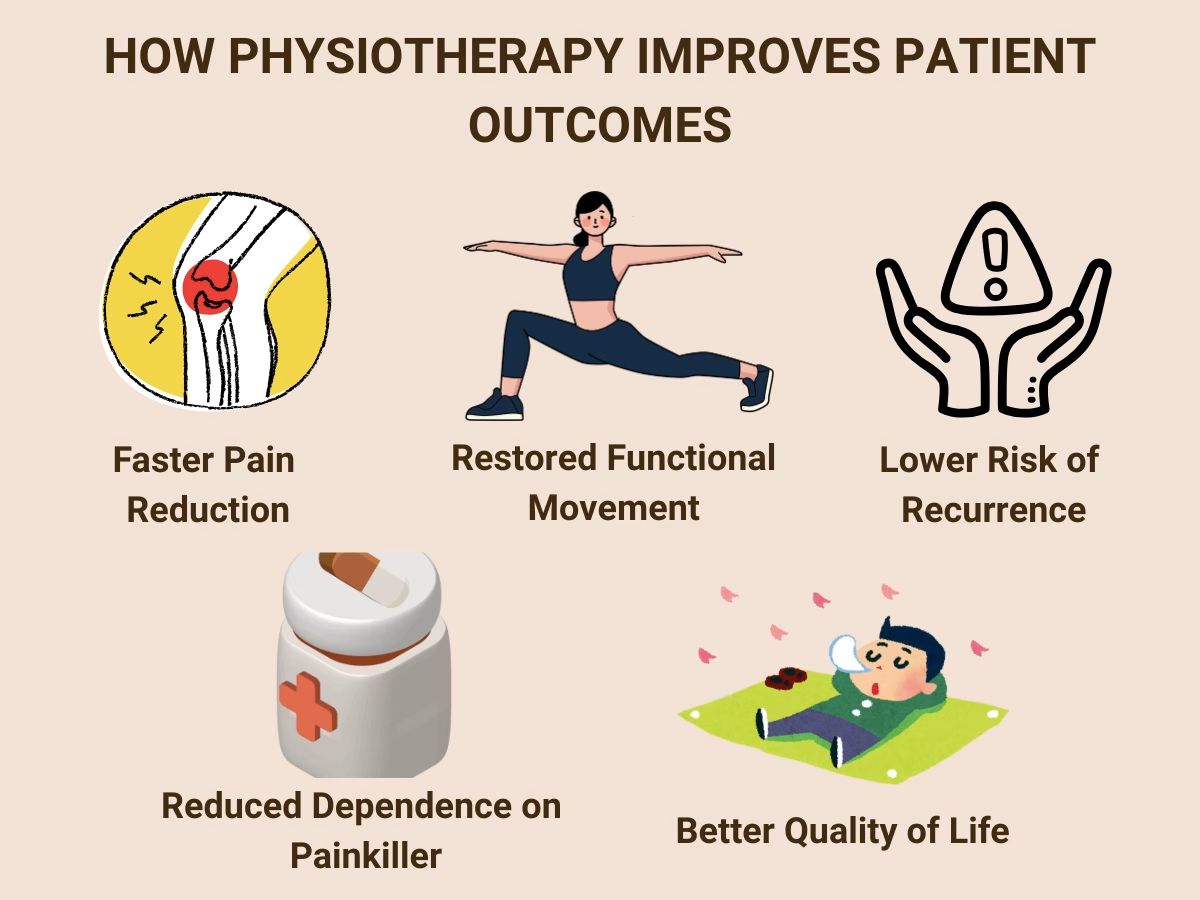
1. Faster Pain Reduction
Hands-on therapy + targeted exercises
→ reduces inflammation + improves mobility quickly.
2. Restored Functional Movement
Patients regain the ability to:
- bend
- lift
- climb stairs
- turn the neck comfortably
3. Lower Risk of Recurrence
Strengthening and movement retraining stop old injuries from coming back.
4. Reduced Dependence on Painkillers
Physiotherapy offers natural ways to relieve pain.
5. Better Quality of Life
Patients report improved sleep, productivity, and confidence in movement.
Key Benefits of Pain Management in Butterworth
Quick summary:
- Treats root cause of pain
- Reduces inflammation naturally
- Corrects muscle imbalance
- Improves flexibility & joint motion
- Prevents recurring pain
- Builds long-term strength
- Enhances mobility and daily performance
When Should You Seek Physiotherapy for Pain?
Seek treatment if you experience:
- Pain lasting more than 5 days
- Pain that spreads or radiates
- Weakness or numbness
- Difficulty sleeping due to pain
- Recurrent pain after activity
- Reduced work performance
Early treatment significantly improves recovery time.
FAQ: Pain Management in Butterworth
1. Is physiotherapy suitable for chronic pain?
Yes. Modern techniques calm irritated nerves, retrain movement, and rebuild support structures.
2. How many sessions do I need?
Most patients see meaningful improvement by Session 2–4 depending on the condition.
3. Are the treatments painful?
Most techniques are gentle. Some discomfort may occur during trigger point release, but it is tolerable and short-lived.
4. Can physiotherapy help even if traditional treatments failed?
Yes, physiotherapy addresses biomechanical issues that medication cannot fix.
5. Do I need imaging (X-ray/MRI)?
Not always. Physiotherapists can assess mechanical and muscular issues clinically.
Conclusion
With modern, evidence-based techniques, Pain Management in Butterworth now delivers far more than temporary relief. Physiotherapists address the root cause of pain through manual therapy, dry needling, mobility training, and functional strengthening, giving patients better long-term mobility, stability, and confidence.