
Table of Contents
How Physiotherapy Helps You Return to Exercise After an Injury
Getting back to exercise after an injury can be more complicated than simply waiting for the pain to disappear.
You may feel better after resting for a few days, but still notice weakness, stiffness, reduced movement or a lack of confidence when you try to exercise again. Returning too quickly can also cause symptoms to flare up.
Physiotherapy can help you understand your current physical limitations and progressively rebuild the movement, strength and function needed for your chosen activities.
The exact rehabilitation approach depends on the injury, its severity, your current condition and the type of exercise you want to return to.
Why is returning to exercise difficult after an injury?
An injury can temporarily change how you move and how much physical activity you can tolerate.
You may reduce activity because of pain or follow medical advice to rest a particular area. Over time, this can affect strength, mobility, coordination or confidence in movement.
For example, after a knee injury, you may be able to walk comfortably but struggle when running or changing direction. After a shoulder injury, everyday movements may feel manageable while lifting weights remains difficult.
This is why returning to your normal exercise routine should not always be based solely on whether the pain has disappeared.
Physiotherapy starts by assessing where you are now
Before deciding how to progress your exercise, a physiotherapist can assess your current condition.
Depending on the injury, this may include looking at:
- Joint movement and mobility
- Muscle strength
- Balance and coordination
- Functional movements
- Current pain and symptoms
- How you perform movements relevant to your activity
Your physiotherapist may also ask about the injury itself, your previous activity level and what you want to return to doing.
This helps establish a more realistic starting point for rehabilitation.
For example, the programme for someone who wants to return to recreational jogging may be very different from the rehabilitation needs of someone who wants to return to competitive badminton or heavy gym training.
Rehabilitation can rebuild strength and movement
After a period of reduced activity, the affected area may not have the same strength or physical capacity as before the injury.
Exercise therapy can be used to progressively rebuild relevant strength and movement.
The exercises will depend on the injury and recovery stage. They may begin with relatively simple movements and progress as your physical capacity improves.
The goal is not necessarily to make the exercises difficult immediately.
It is to provide an appropriate level of challenge and gradually increase the demands placed on the body.
Lo Physiotherapy identifies exercise therapy as a core part of its treatment approach, with exercises tailored to the individual’s condition and needs.
Returning to exercise is usually a gradual process
One of the common mistakes after an injury is going from very little activity directly back to the previous training level.
For example, someone who normally runs 10 kilometres may feel better after a period of rest and immediately attempt the same distance.
If the body is not ready for that level of demand, symptoms may return.
A more gradual approach may involve progressively increasing factors such as:
- Exercise duration
- Training frequency
- Resistance
- Running distance
- Speed
- Movement complexity
- Sport-specific demands
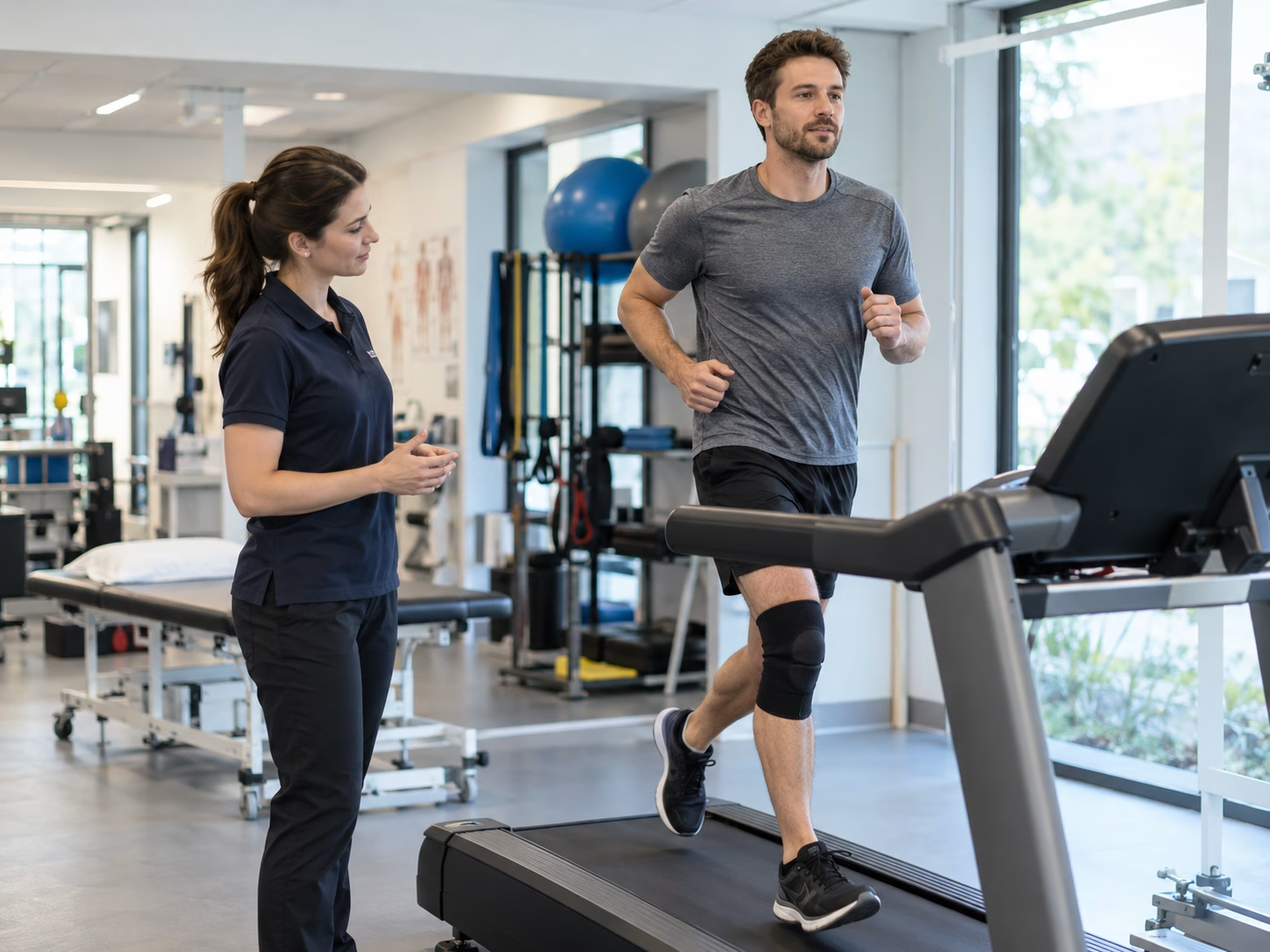
The appropriate progression depends on your injury and goals.
There is no single return-to-exercise timeline that applies to everyone.
Physiotherapy can help you identify what you need before progressing
Being able to perform normal daily activities does not necessarily mean that you are ready for higher-level exercise.
Your everyday activities may place relatively low demands on the injured area compared with running, jumping, lifting or changing direction during sport.
For example, you may be able to walk without significant discomfort but still lack the strength or control required for running.
A physiotherapist can therefore assess the movements and physical qualities that are relevant to your intended activity.
This can help make your return more specific to what you actually want to do rather than simply aiming to eliminate pain.
Your rehabilitation can become more specific as you improve
Early rehabilitation may focus on basic movement, strength and control.
As your physical capacity improves, exercises can become more closely related to your normal activity.
For someone returning to running, this may eventually involve movements and exercises that place greater demands on the legs.
For someone returning to racket sports, rehabilitation may need to progress towards faster movements, changes of direction and sport-specific demands.
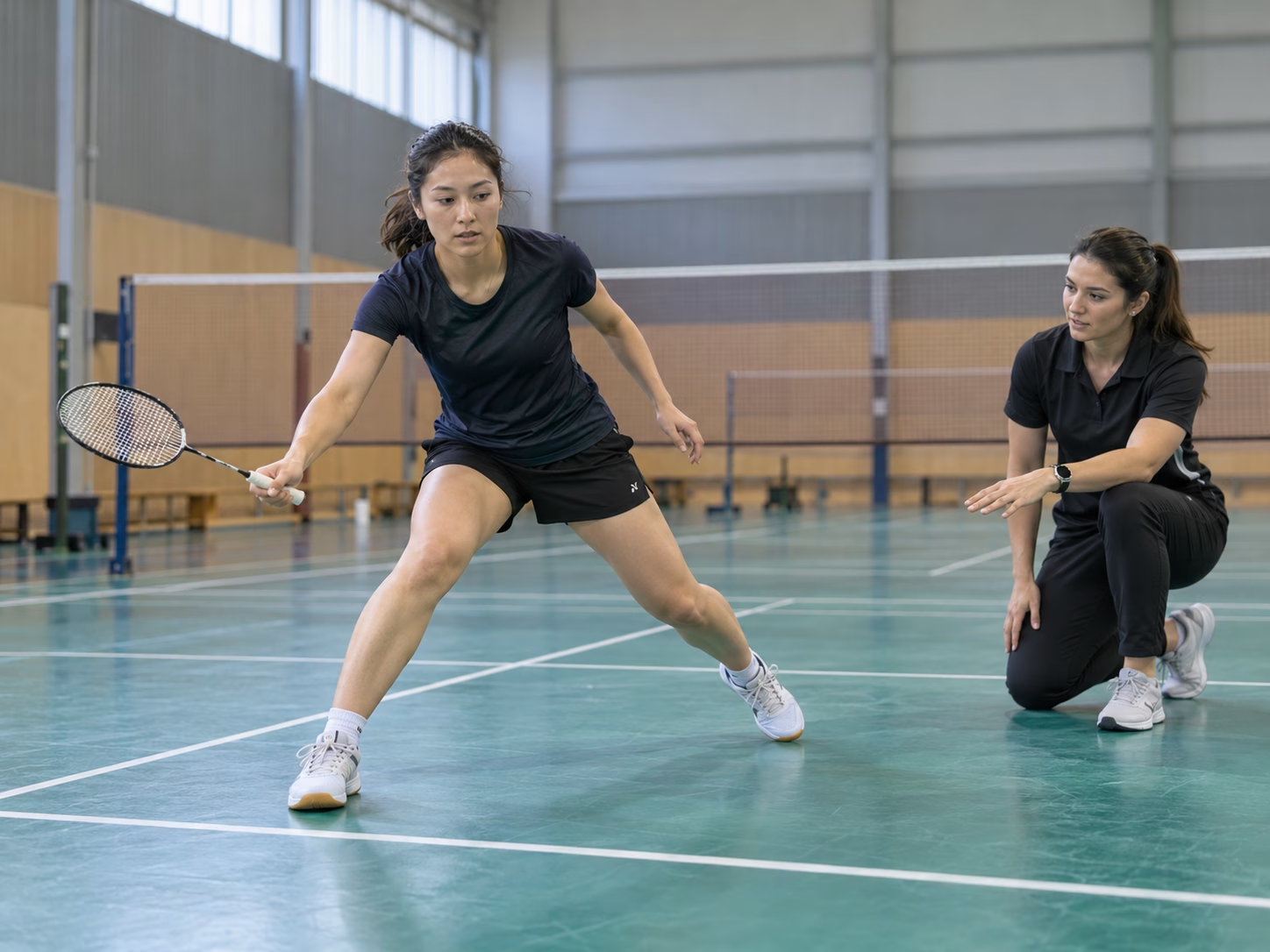
For someone returning to strength training, the progression may involve gradually increasing resistance and improving the ability to perform relevant movements safely.
The closer you get to your normal activity, the more important it becomes to consider the demands that activity places on your body.
Pain is useful information, but it is not the only consideration
Pain can be an important part of monitoring recovery, but it should not be the only measure of progress.
You may also need to consider whether:
- Your movement has improved
- Strength is returning
- You can perform relevant exercises with better control
- Your activity tolerance has increased
- You can perform daily tasks comfortably
- Your confidence in movement has improved
At the same time, a reduction in pain does not automatically mean you should immediately return to your previous training intensity.
The appropriate progression depends on the injury and your individual recovery.
What if the pain returns when you exercise?
A temporary increase in symptoms does not automatically mean that you have caused another injury.
However, recurring symptoms should not simply be ignored.
Consider what changed before the symptoms appeared.
Did you:
- Increase your training distance?
- Add more weight?
- Exercise for longer?
- Return to activity too quickly?
- Introduce a movement you had not performed for some time?
Discuss recurring symptoms with your physiotherapist so that your rehabilitation and activity levels can be reviewed.
If symptoms are severe, rapidly worsening or associated with significant swelling, weakness, loss of sensation or another concerning change, seek appropriate medical assessment.
Physiotherapy can also help rebuild confidence
After an injury, physical recovery and confidence do not always progress at the same rate.
You may be physically capable of performing an activity but hesitate because you are worried about hurting yourself again.
This can be particularly noticeable when returning to movements that previously caused pain.
Progressive rehabilitation allows you to gradually expose yourself to higher levels of physical demand rather than immediately returning to the most difficult activity.
Building confidence should not mean ignoring pain or pushing through symptoms. It means developing the physical capacity and understanding needed to make informed decisions about activity.
When should you see a physiotherapist after an injury?
Consider a physiotherapy assessment if an injury is:
- Preventing you from exercising normally
- Affecting your movement or strength
- Repeatedly causing symptoms when you resume activity
- Making you unsure about how to return to exercise
- Limiting your ability to perform work or daily activities
- Taking longer than expected to recover
Physiotherapy may also be useful if you have already returned to exercise but repeatedly experience the same problem.
The assessment can help determine whether physiotherapy is appropriate and what type of rehabilitation may be suitable.
However, significant injuries or symptoms requiring medical evaluation should be assessed by the appropriate healthcare professional first.
Frequently Asked Questions
1. How do I know if I am ready to exercise again after an injury?
Being pain-free is not the only consideration. You should also consider whether your movement, strength, balance and ability to perform activity-specific movements have recovered sufficiently. If you are unsure, a physiotherapist can assess your current physical capacity and help determine an appropriate progression.
2. Should I stop exercising completely if I still have some pain?
Not necessarily. Whether you should modify or stop an activity depends on the injury, symptoms and type of exercise. Continuing at the same intensity may not be appropriate, but complete inactivity is not always necessary. A physiotherapist can help determine what level of activity is suitable during recovery.
3. How long does it take to return to exercise after an injury?
There is no fixed recovery period because it depends on the type and severity of the injury, your physical condition and the demands of your chosen activity. Returning to daily activities may happen before you are ready for running, heavy lifting or competitive sport, which can require further rehabilitation.
4. What should I do if the same injury keeps hurting when I exercise?
If symptoms repeatedly return when you resume exercise, avoid simply repeating the same cycle of rest and activity. Have the problem reassessed so that your current movement, strength, activity level and exercise demands can be reviewed. Your rehabilitation or return-to-exercise progression may need to be adjusted.
Your goal is not simply to return. It is to return appropriately.
Getting back to exercise should not be measured only by how quickly you can resume your old routine.
A better goal is to gradually rebuild the physical capacity required for the activity you want to perform.
Depending on your injury, this may involve improving movement, rebuilding strength, developing balance and coordination, increasing activity tolerance and progressively introducing more demanding exercises.
At Lo Physiotherapy, exercise therapy is incorporated into individualised treatment plans alongside other physiotherapy approaches where appropriate. The clinic provides physiotherapy and rehabilitation for a range of musculoskeletal and sports-related conditions.
If an injury has interrupted your exercise routine, a physiotherapy assessment can help you understand your current limitations and develop a more structured path towards returning to the activities you enjoy.