
Table of Contents
Rehabilitation Centre in Butterworth: Restoring Strength, Mobility, and Confidence After Injury
Recovering from an injury isn’t just about reducing pain, it’s about restoring the full capacity of your body so you can move, work, and live without limitations or fear. A dedicated Rehabilitation Centre in Butterworth plays a critical role in this process by combining clinical expertise, injury-specific physiotherapy, and modern rehabilitation technologies that help patients recover stronger and more confidently than before.
Whether you’re healing from a sports injury, surgery, workplace strain, or long-standing mobility problems, structured rehabilitation ensures every stage of recovery is guided by science, measurable goals, and skilled clinicians.

Why Rehabilitation in Butterworth Is Growing in Demand
Butterworth has become a rising centre for rehabilitation thanks to clinics that focus on longterm functional outcomes, not just symptomatic treatment. Compared to general physiotherapy, a structured rehab centre offers:
- Clear progression frameworks
- Objective strength and mobility assessments
- Tailored exercise prescriptions
- Specialist technologies for difficult cases
- Return-to-work and return-to-sport planning
Patients here increasingly seek evidence-based physiotherapy, especially after learning how improper or incomplete rehab often leads to recurring injuries, chronic stiffness, or movement imbalances.
For broader comparisons in Penang, you may also refer to:
🔗 Rehab in Bayan Lepas
🔗 Top Rehabilitation Centre in Penang
What Makes an Effective Rehabilitation Centre in Butterworth?
True rehabilitation is systematic and personalised. A high-quality centre includes:
✔ Injury-Specific Clinical Assessment
Instead of generic exercises, the therapist evaluates:
- Joint stability
- Strength deficits
- Muscle recruitment patterns
- Biomechanics
- Balance & proprioception
- Functional restrictions (climbing stairs, sitting, lifting, running, etc.)
This forms the foundation of the rehab plan.
✔ Multi-Phase Recovery Roadmap
Rehabilitation progresses through predictable stages:
- Acute phase – swelling control, pain management, gentle mobility
- Restorative phase – mobility restoration, neuromuscular activation
- Strength phase – progressive resistance, functional strength
- Integration phase – movement retraining, sport/work simulations
- Return-to-performance phase – agility, endurance, high-demand training
✔ Modern Physiotherapy Techniques
From movement retraining to medical exercise therapy, outcomes are enhanced through advanced tools that target healing, muscle activation, and structural recovery.
Injury-Specific Recovery: Tailored Treatment for Better Outcomes
Every injury behaves differently, and needs a different rehab approach. Below is an in-depth breakdown of conditions commonly treated in a Rehabilitation Centre in Butterworth.
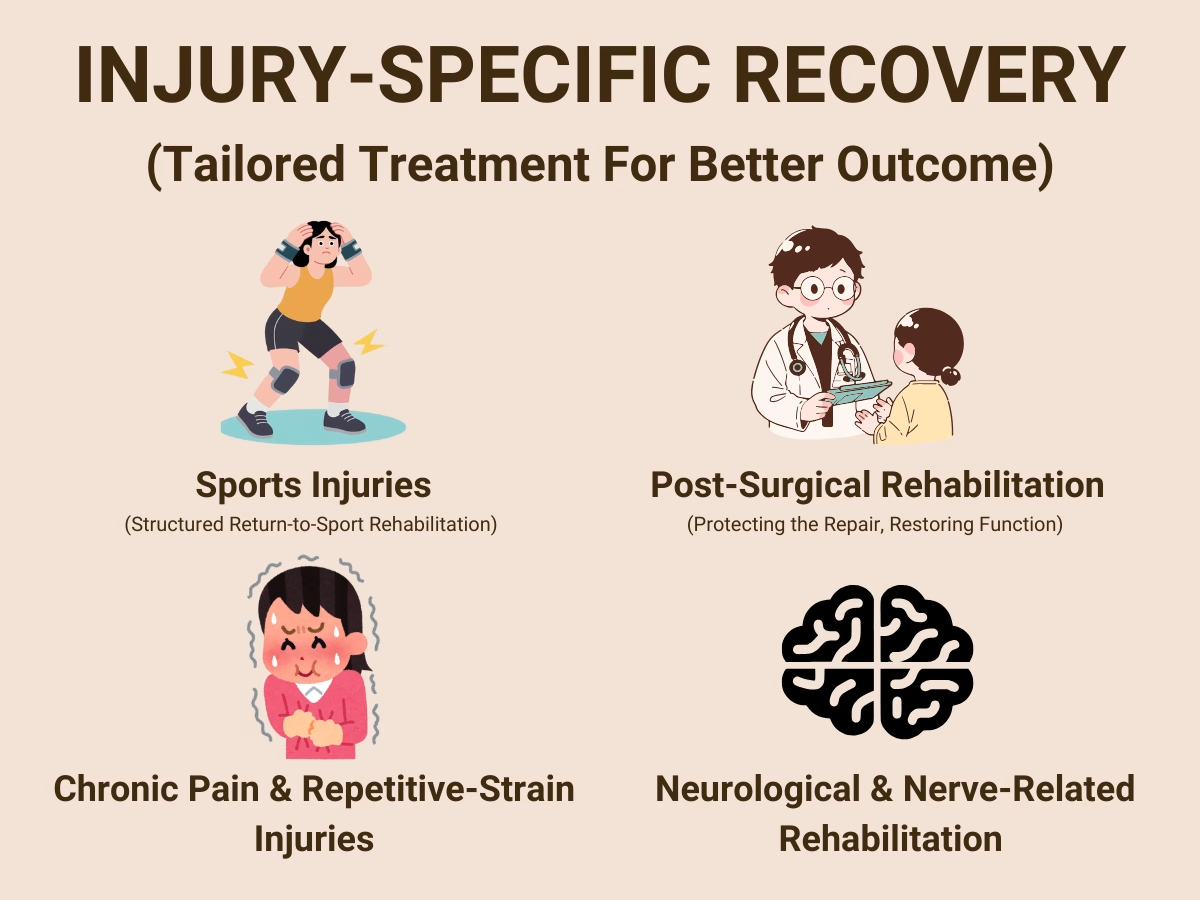
1. Sports Injuries: Structured Return-to-Sport Rehabilitation
Common injuries treated:
- ACL/meniscus injuries
- Ankle sprains
- Hamstring/quad tears
- Shoulder impingement/rotator cuff strains
- Tendinopathies (Achilles, patella, elbow)
Why athletes need targeted rehab:
Sports injuries often involve:
- Joint instability
- Poor movement mechanics
- Weak deep stabilising muscles
- High re-injury risk without proper conditioning
Outcome-Focused Approaches:
✔ Movement Pattern Analysis
Clinicians analyse running, jumping, pivoting, or landing techniques to identify faulty biomechanics.
✔ Tissue Load Management
Training volume and intensity are controlled to avoid flare-ups while building resilience.
✔ End-Stage Sports Conditioning
A key part often missed in general physiotherapy:
- Agility drills
- Eccentric strength training
- Explosive power training
- Sport-specific functional sequences
This ensures the athlete is functionally ready, not just “pain-free.”
2. Post-Surgical Rehabilitation: Protecting the Repair, Restoring Function
Surgeries commonly rehabilitated:
- ACL reconstruction
- Rotator cuff repair
- Meniscectomy
- Hip/knee replacement
- Spinal decompression
- Fracture fixation
Post-surgery challenges:
- Swelling
- Muscle inhibition (e.g., quadriceps shutdown)
- Scar tissue tightening
- Joint stiffness
- Fear or hesitation with movement
Clinical Outcome Priorities:
✔ Controlled Early Movement
Prevents stiffness and improves joint lubrication.
✔ Muscle Reactivation
Uses neuromuscular electrical stimulation (NMES) or targeted motor-point training to “wake up” weak muscles.
✔ Safe Strengthening Pathways
Strength progression is mapped to surgical protocols to avoid overloading the repair.
✔ Long-term functional restoration
Returning to normal walking, stair climbing, kneeling, grip strength, or overhead movement depending on surgery type.
3. Chronic Pain & Repetitive-Strain Injuries
These injuries often arise from:
- Poor ergonomics
- Weak stabilising muscles
- Imbalanced movement
- Prolonged sitting or repetitive work
Examples:
- Neck pain from desk posture
- Carpal tunnel syndrome
- Lower-back mechanical pain
- Shoulder tendon overload
- IT band syndrome
Rehab focus:
- Correcting muscular imbalances
- Restoring endurance to stabilising muscles
- Improving joint mechanics
- Teaching proper workstation posture
- Training movement efficiency for daily tasks
4. Neurological & Nerve-Related Rehabilitation
Conditions treated:
- Sciatica
- Nerve entrapment
- Post-stroke mobility limitation
- Vestibular or balance problems
Treatment goals:
- Improve nerve mobility
- Restore coordination
- Retrain balance, gait, and sensory integration
- Strengthen supporting muscles
- Reduce fall risk
These cases benefit greatly from progressive neuro-motor re-education, which is a key skill in modern physiotherapy
Modern Physiotherapy Techniques Used in Butterworth Rehab Centres
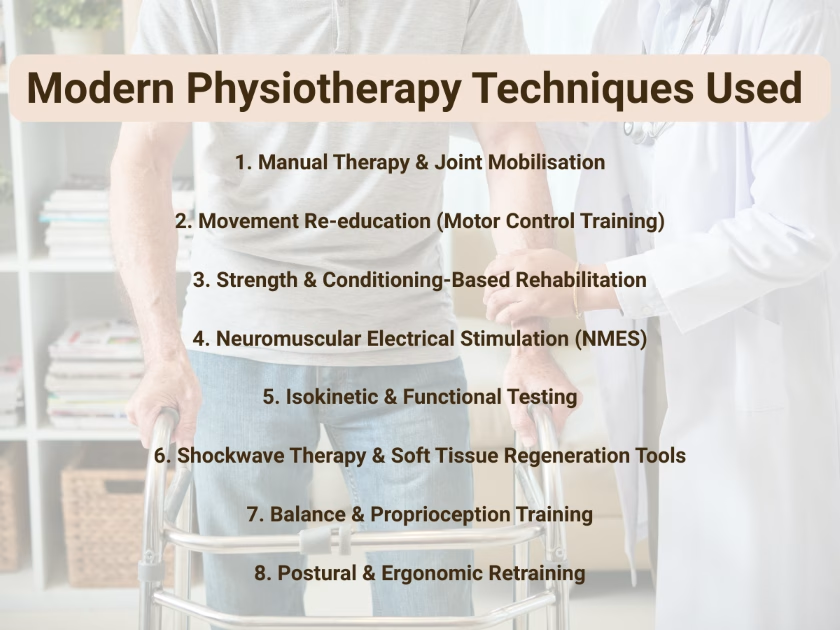
Below is a deeper look at advanced techniques commonly used in structured rehabilitation.
1. Manual Therapy & Joint Mobilisation
Restores normal arthrokinematics, reduces stiffness, and prepares the joint for active training.
2. Movement Re-education (Motor Control Training)
Corrects dysfunctional patterns like:
- Knee collapse during squats
- Pelvic drop during walking
- Rounded shoulders in overhead movements
This reduces long-term re-injury risk.
3. Strength & Conditioning-Based Rehabilitation
Modern rehab centres often incorporate strength training similar to sports conditioning:
- Progressive overload
- Tempo-based exercise
- Functional strength sequencing
- Core stabilisation
4. Neuromuscular Electrical Stimulation (NMES)
Reactivates inhibited muscles after injury or surgery.
5. Isokinetic & Functional Testing
Used to assess:
- Strength symmetry
- Endurance
- Power output
- Readiness for return-to-sport or return-to-work
6. Shockwave Therapy & Soft Tissue Regeneration Tools
Supports chronic tendon healing and stimulates cell repair.
7. Balance & Proprioception Training
Critical for ankle, knee, hip, and spinal rehab.
8. Postural & Ergonomic Retraining
Tailored to office workers, factory workers, drivers, and manual labourers
Patient Outcomes You Can Expect from a Rehabilitation Centre in Butterworth
✔ Enhanced Strength & Stability
Structured loading rebuilds true functional strength, not just pain-free movement.
✔ Better Mobility & Joint Function
Manual therapy + active rehabilitation = improved long-term flexibility.
✔ Reduced Re-injury Rates
Correcting movement faults ensures injuries don’t repeat.
✔ Faster Return to Work / Sport
Clear milestones guide you safely back to normal activities.
✔ Improved Confidence in Movement
Patients no longer fear bending, lifting, running, or training.
✔ Long-Term Pain Reduction
Because the root mechanics are corrected, not masked.
What Your Rehab Process Looks Like
1. Clinical Assessment
Movement analysis + muscle testing + functional evaluation.
2. Goal Setting
Clear timelines matched to your lifestyle or sport.
3. Structured Rehab Plan
Manual therapy, strength training, neuromuscular retraining, and functional conditioning.
4. Progress Tracking
Strength and mobility data, functional benchmarks, and re-assessment screens.
5. Long-Term Prevention Strategies
Ergonomics, training advice, home exercise programs, and maintenance sessions.
Who Benefits from a Rehabilitation Centre in Butterworth?
- Athletes undergoing structured return-to-play
- Office workers with chronic neck/back strains
- Manual labourers with repetitive-load injuries
- Seniors wanting improved mobility
- Post-surgical patients needing safe progression
- Anyone with chronic or recurring pain
- Individuals recovering from falls or accidents
FAQs: Rehabilitation Centre in Butterworth
1. How long does rehabilitation take?
Depending on injury severity:
- Minor sprains: 2–4 weeks
- Muscle tears: 4–8 weeks
- Post-surgery: 3–9 months
- Chronic issues: depends on severity and lifestyle factors
2. Do I need imaging before starting rehab?
Not always. Physiotherapists assess functional deficits and refer for imaging only when
clinically relevant
3. Can rehabilitation prevent surgery?
In many cases, yes, structured strengthening and movement correction often stabilise the
condition enough to avoid surgery
4. Will I be given home exercises?
Yes. Home programs significantly improve outcomes and reinforce clinic progress.
Recover Stronger, Move Better — Your Journey Starts Here
If you’re recovering from an injury, whether sports-related, work-induced, or post-surgical, the right Rehabilitation Centre in Butterworth provides the expertise and structured care needed to restore full function.
Through modern physiotherapy techniques, personalised rehab plans, and evidence-driven treatment stages, patients not only recover, they regain strength, mobility, and confidence to return to life without limitations.