Table of Contents
Medical Acupuncture in Penang: Enhancing Physiotherapy Results and Speeding Recovery
Recovery from injury or surgery is rarely linear. Even with structured physiotherapy, patients
may encounter plateaus, persistent inflammation, muscle inhibition, or delayed tissue healing
that slow progress.
In recent years, physiotherapy clinics in Penang have increasingly turned to medical
acupuncture as a scientifically grounded adjunct therapy to address these barriers and
optimize recovery outcomes.
While acupuncture is often associated with pain management, medical acupuncture in a
physiotherapy context serves a broader purpose: improving muscle activation, circulation,
and neuromuscular coordination to enhance rehabilitation efficiency and accelerate
functional recovery.
Understanding Medical Acupuncture: A Scientific Approach to Healing
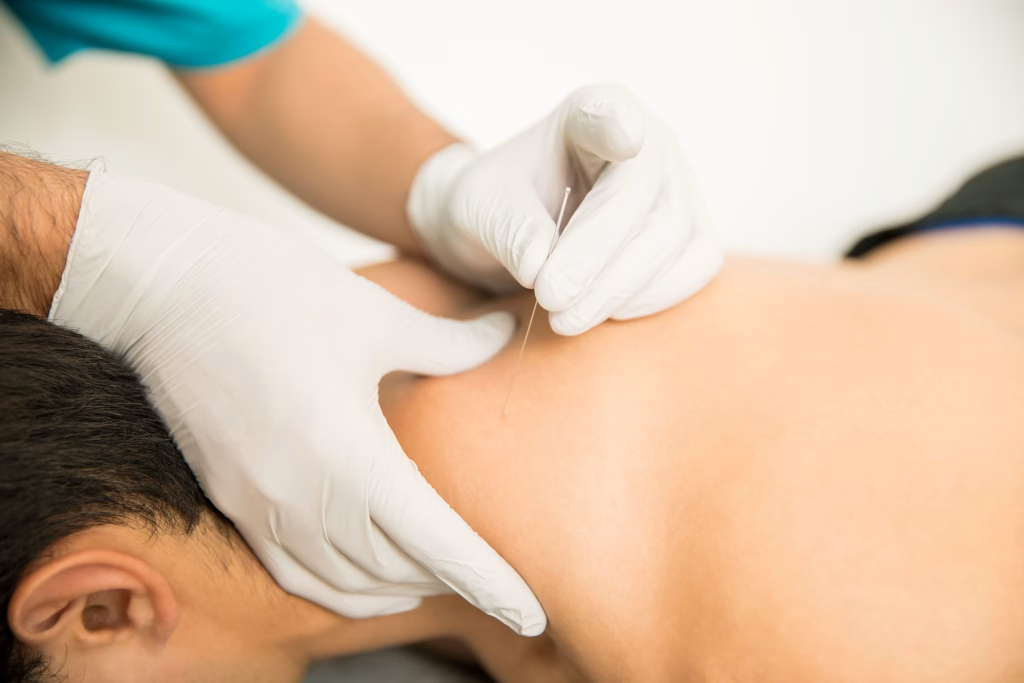
Unlike traditional acupuncture, which is rooted in meridian theory, medical acupuncture is based on neurophysiological and anatomical principles. It is performed by qualified healthcare professionals, often physiotherapists, who use fine, sterile needles to stimulate specific motor points, myofascial trigger zones, and neural pathways.
Key Mechanisms Behind Its Effectiveness
Neuromodulation:
Needle stimulation triggers the release of endorphins and serotonin, reducing pain perception and modulating central nervous system responses.
Acupuncture increases microcirculation in targeted areas, improving oxygen and nutrient delivery essential for tissue repair.
Activating motor points helps “wake up” inhibited muscles, a common issue following surgery or immobilization.
Research indicates acupuncture influences cytokine balance, aiding the body’s antiinflammatory response and reducing swelling.
This scientific approach makes medical acupuncture particularly valuable in rehabilitation settings, where controlled physiological stimulation can complement manual and exercisebased therapies.
Integrating Medical Acupuncture into Physiotherapy
In leading physiotherapy practices across Penang, medical acupuncture is integrated as part of a structured treatment pathway, not as a standalone intervention. The physiotherapist tailors acupuncture sessions according to the patient’s condition, response to movement, and stage of recovery.
Typical Integration Framework
|
Stage |
Physiotherapy Focus |
Role of Medical Acupuncture |
|
Early Phase (0–2 weeks post-injury/surgery) |
Pain control, swelling management |
Reduces inflammation, modulates pain, and promotes local healing |
|
Mid Phase (2–6 weeks) |
Restoring movement, activating muscles |
Stimulates motor points to facilitate muscle recruitment and joint mobility |
|
Late Phase (6+ weeks) |
Strengthening and reconditioning |
Improves circulation, supports tissue resilience, and prevents compensatory tension |
By aligning both approaches, physiotherapists achieve faster progression milestones, from pain relief to full function.
Clinical Advantages: Why Integration Improves Recovery Outcomes
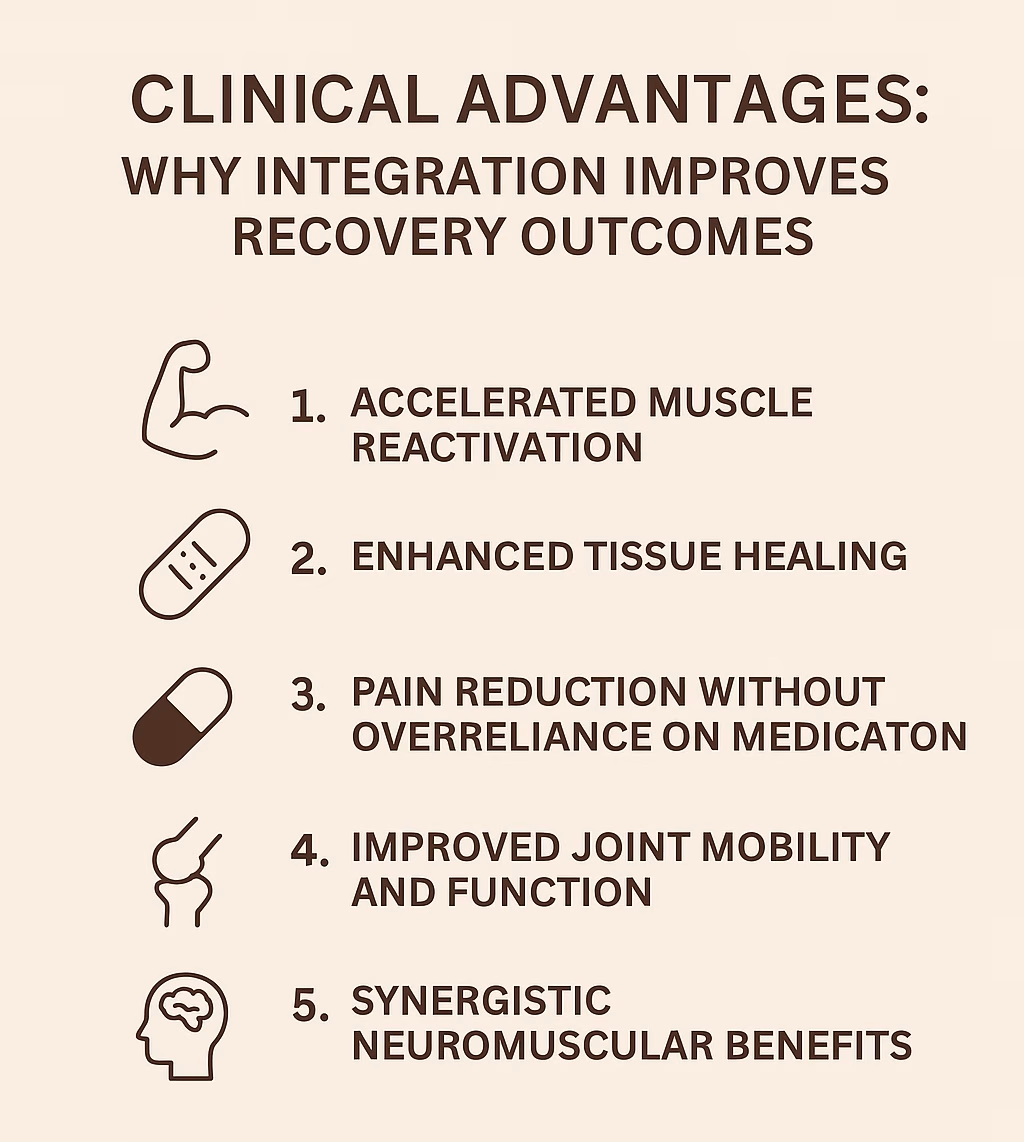
1. Accelerated Muscle Reactivation
Following injury or surgery, muscles often “shut down” due to neural inhibition. For example, after a knee surgery, the quadriceps may fail to contract properly despite exercise efforts. By stimulating the muscle’s motor point, acupuncture re-establishes neural pathways, allowing quicker reactivation and more effective strengthening during physiotherapy.
2. Enhanced Tissue Healing
Microtrauma from sports injuries or repetitive strain can limit blood flow. Acupuncture promotes vasodilation, improving tissue oxygenation and waste removal.This accelerates collagen synthesis and tissue remodelling, essential for regaining structural integrity
3. Pain Reduction Without Overreliance on Medication
While pain management isn’t the sole purpose, acupuncture’s neuromodulatory effects make rehabilitation more tolerable, allowing patients to participate in physiotherapy exercises earlier and with greater comfort.
4. Improved Joint Mobility and Function
By releasing myofascial trigger points, acupuncture relieves muscle tension that restricts movement. Combined with joint mobilization techniques, patients achieve greater range of motion and smoother movement patterns.
5. Synergistic Neuromuscular Benefits
Research shows acupuncture enhances proprioception, the body’s sense of position and movement. When paired with balance and coordination exercises, this leads to better functional control and reduced risk of re injury.
Scientific Evidence Supporting Acupuncture-Physiotherapy Integration
Multiple studies have validated the combined approach:
- A 2021 systematic review in the Journal of Orthopaedic & Sports Physical Therapy found that acupuncture combined with physiotherapy produced significantly faster improvements in pain reduction and function in musculoskeletal disorders compared to physiotherapy alone.
- Clinical data on post-operative rehabilitation (e.g., total knee replacement) show patients receiving adjunctive acupuncture achieved earlier muscle strength gains and greater range of motion at six weeks post-surgery.
- Sports medicine trials indicate acupuncture supports faster return-to-play timelines for athletes with soft tissue injuries by reducing inflammation and facilitating active recovery.
These findings reinforce the importance of multimodal rehabilitation, where acupuncture enhances the body’s biological readiness for physiotherapy-driven recovery.
Common Conditions Treated with Integrated Medical Acupuncture
Physiotherapy clinics in Penang commonly use medical acupuncture in combination with manual therapy and exercise for conditions such as:
- Post-surgical rehabilitation (ACL reconstruction, shoulder arthroscopy, spinal fusion)
- Sports-related injuries (hamstring strain, tennis elbow, rotator cuff tendinopathy)
- Chronic musculoskeletal disorders (low back pain, neck stiffness, frozen shoulder)
- Postural and repetitive strain issues (office-related upper back or wrist pain)
- Peripheral nerve injuries (facial palsy, nerve entrapment syndromes)
In these cases, acupuncture acts as a biological catalyst, helping the body respond more effectively to physiotherapeutic interventions.
Patient Outcomes: Evidence from Clinical Practice in Penang
Physiotherapists trained in medical acupuncture in Penang report consistently better patient outcomes when integrating both modalities:
Patients return to activity or sport up to 20–30% faster when acupuncture is used adjunctively.
Restored neuromuscular balance lowers the likelihood of re-injury or compensatory strain.
Decreased pain and stiffness make physiotherapy sessions more tolerable, encouraging compliance and motivation.
Patients perceive integrated care as more holistic and effective compared to single-modality treatments.
These outcomes highlight that medical acupuncture doesn’t replace physiotherapy, it enhances its effectiveness by addressing the body’s healing mechanisms at multiple physiological levels.
Case Insight: Shoulder Rehabilitation
Consider a patient recovering from rotator cuff repair surgery.
Despite consistent physiotherapy, progress may plateau due to lingering muscle inhibition in the shoulder stabilizers. By incorporating medical acupuncture targeting the supraspinatus motor point and surrounding myofascial regions, the physiotherapist stimulates faster muscle recruitment. Within a few sessions, the patient often regains better shoulder control, range of motion, and strength symmetry, allowing progression to resistance training much earlier than expected. This integrative approach translates to fewer treatment sessions and earlier functional independence.
Choosing a Qualified Physiotherapist in Penang
For optimal results, it’s essential to receive medical acupuncture from a qualified physiotherapist who:
- Holds certification in medical acupuncture or dry needling
- Has a thorough understanding of anatomy and rehabilitation science
- Integrates acupuncture within a structured, goal-based physiotherapy plan
Such professionals ensure that every needling session aligns with clinical objectives, whether it’s reducing inflammation, facilitating activation, or improving range of motion.
Beyond Pain Relief: Redefining Recovery Potential
While pain relief is a welcome outcome, the real strength of medical acupuncture in physiotherapy lies in its ability to:
- Enhance biological healing capacity
- Improve muscle coordination
- Restore efficient movement patterns
- Accelerate return to normal function
This approach represents the next generation of evidence-based rehabilitation, where advanced physiotherapy techniques meet the precision of medical acupuncture for superior patient outcomes.
For readers interested in how acupuncture supports general pain management, refer to our related article:
👉 Medical Acupuncture in Penang: Holistic Pain Relief Backed by Science
Conclusion
Medical acupuncture in Penang is redefining recovery care, moving beyond symptom relief to targeted, functional rehabilitation. By integrating acupuncture into physiotherapy, patients benefit from faster healing, improved strength, and enhanced overall outcomes.
For individuals recovering from injury, surgery, or chronic musculoskeletal conditions, choosing a physiotherapy clinic that offers evidence-based medical acupuncture could be the key to a smarter, faster, and more complete recovery.
People also Ask About Medical Acupuncture
1. How does medical acupuncture differ from traditional acupuncture?
Medical acupuncture is performed by trained healthcare professionals using anatomy-based
needling techniques focused on neuromuscular function, rather than traditional meridian
theory.
2. Is it suitable for post-surgery patients?
Yes. It’s often used after orthopedic surgeries to reduce swelling, activate muscles, and
enhance tissue repair under physiotherapist supervision.
3. How soon can results be seen?
Many patients notice improvement in pain, movement, and muscle response within 2–3
sessions, with continued gains when paired with active physiotherapy.
4. Is it safe?
When performed by a qualified physiotherapist, medical acupuncture is safe, minimally
invasive, and supported by extensive clinical research.